

On the occasion of the 20th Embedded Talks, a highly interesting and practice-oriented discussion on the topic of “Neuromorphic Hardware” took place on Wednesday, May 13, 2026, at Josephs in Nuremberg’s city center. Approximately 40 researchers, developers, and students from universities, research institutes, and industrial companies participated in the event and exchanged ideas about the future role of neuromorphic systems in embedded and edge AI technology.
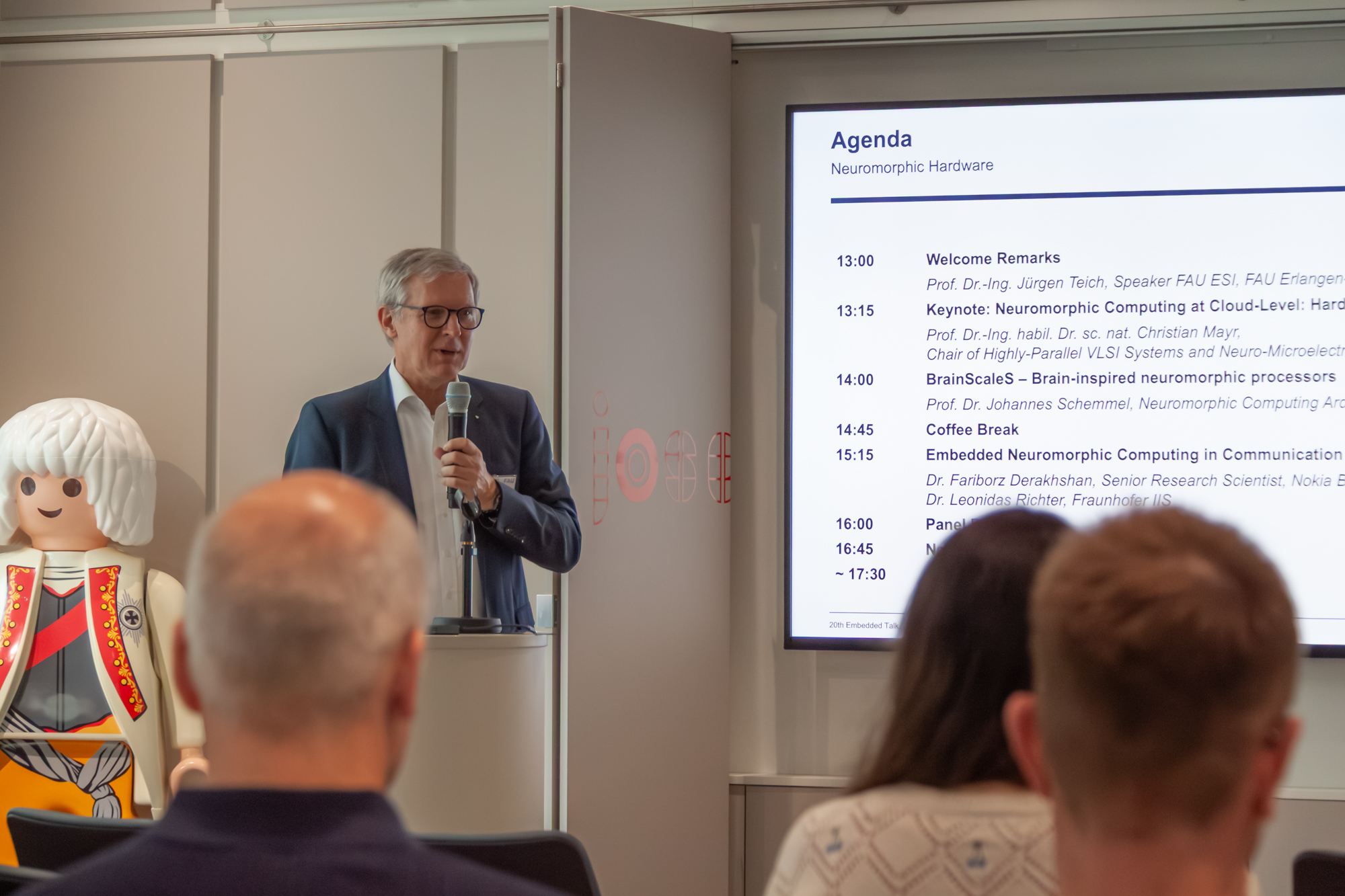
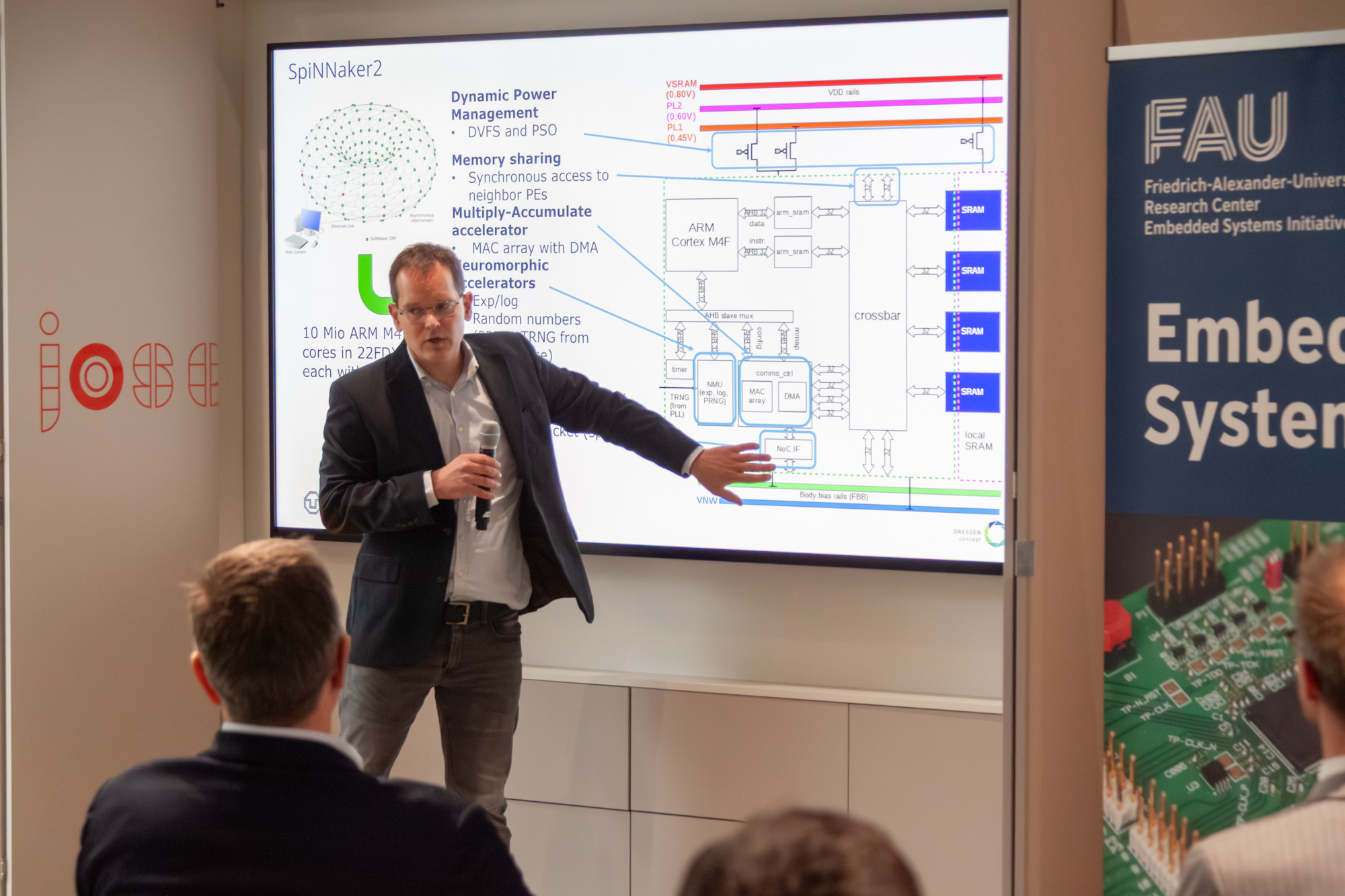
The event was opened with a welcome address by Prof. Dr.-Ing. Jürgen Teich, spokesperson for the FAU Research Center ESI. Prof. Dr.-Ing. Christian Georg Mayr (TU Dresden) then gave a keynote address in which he discussed neuromorphic computing at the cloud level, described the hardware developed so far, and presented application scenarios.
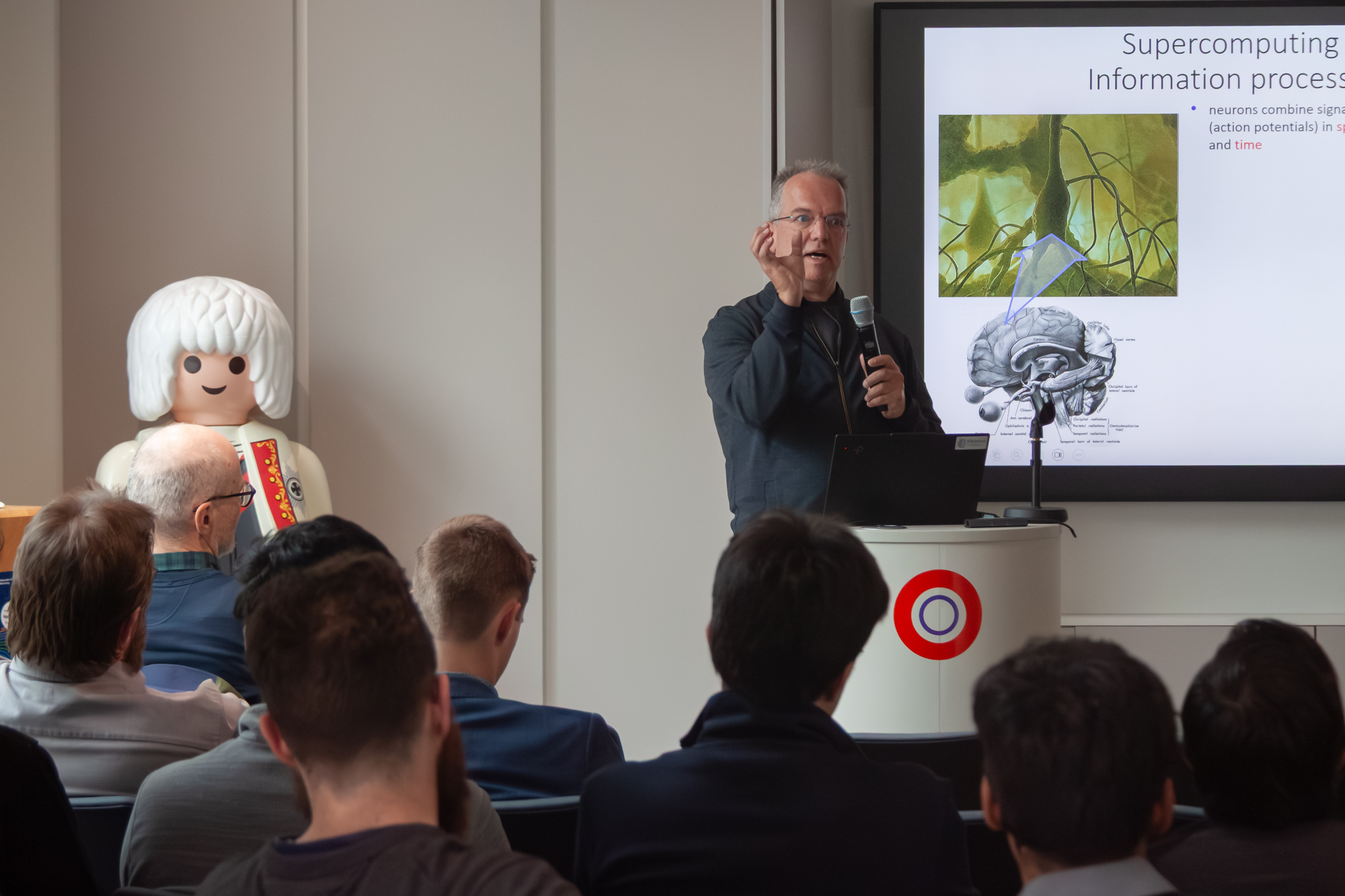
Later, Prof. Dr. Johannes Schemmel (University of Heidelberg) presented the BrainScaleS platform – an analog, neuromorphic architecture that enables energy-efficient, bio-inspired AI through in-memory computing and local learning mechanisms, and showed how it is being further developed with novel scaling concepts despite growing networks in order to be accessible for research in EBRAINS as well.
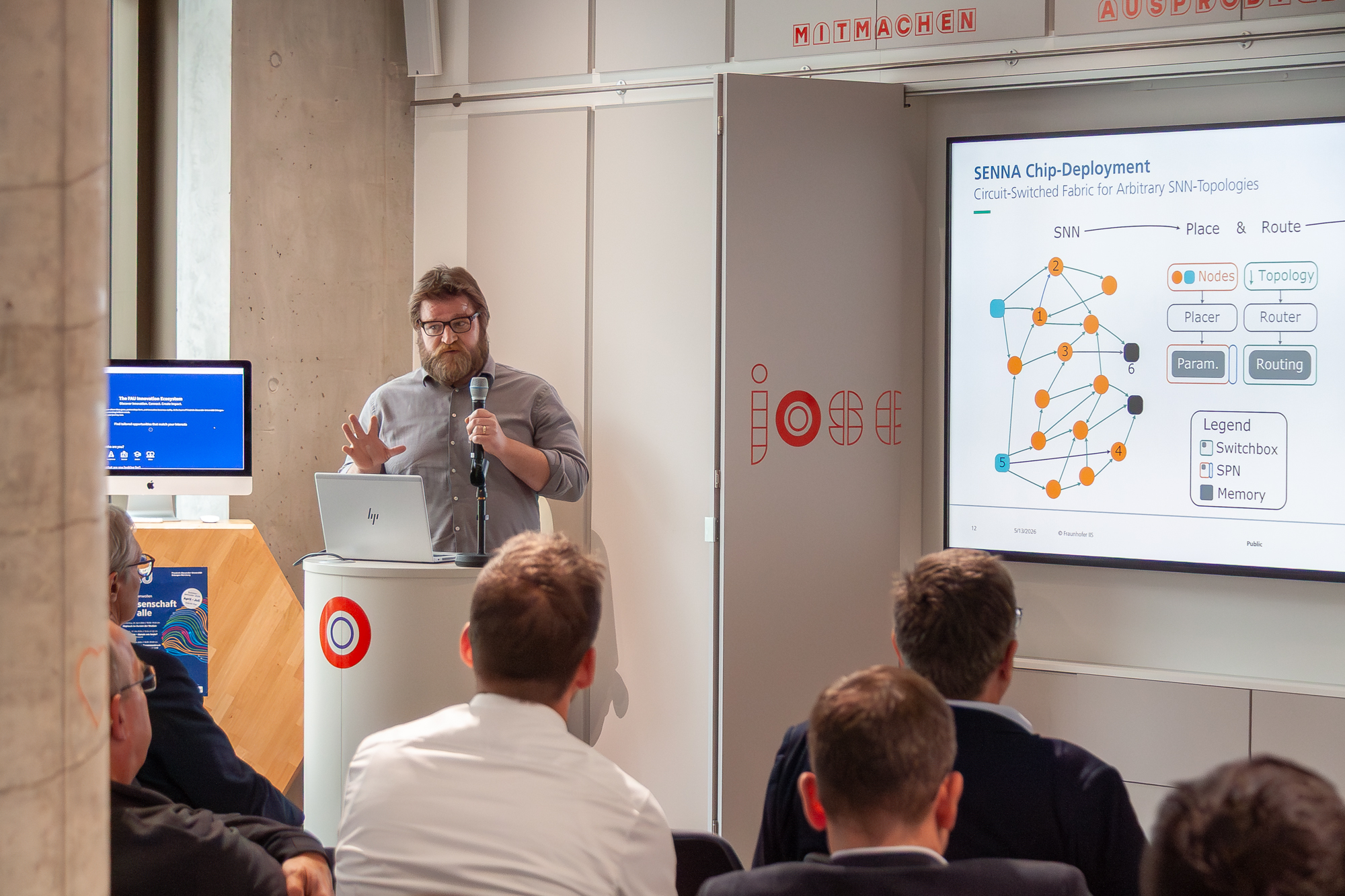
Nach einem kurzen Pausenintermezzo folgte die Präsentation von Dr. Fariborz Derakhshan (Nokia Bell Labs) und Dr. Leonidas Richter (Fraunhofer IIS), die zeigte, wie neuromorphe Hardware mit event-basiertem, spiking-neuronalem Computing künftige Kommunikationssysteme revolutionieren kann – besonders dort, wo Latenz, Energie und Skalierbarkeit entscheidend sind. Anhand zweier neuartiger ASICs – ADELIA und SENNA – demonstrierten sie, wie künstliche Intelligenz direkt in Kommunikationshardware integriert werden kann, um die Grenzen klassischer CPU-/GPU-basierter Systeme zu überwinden.
586
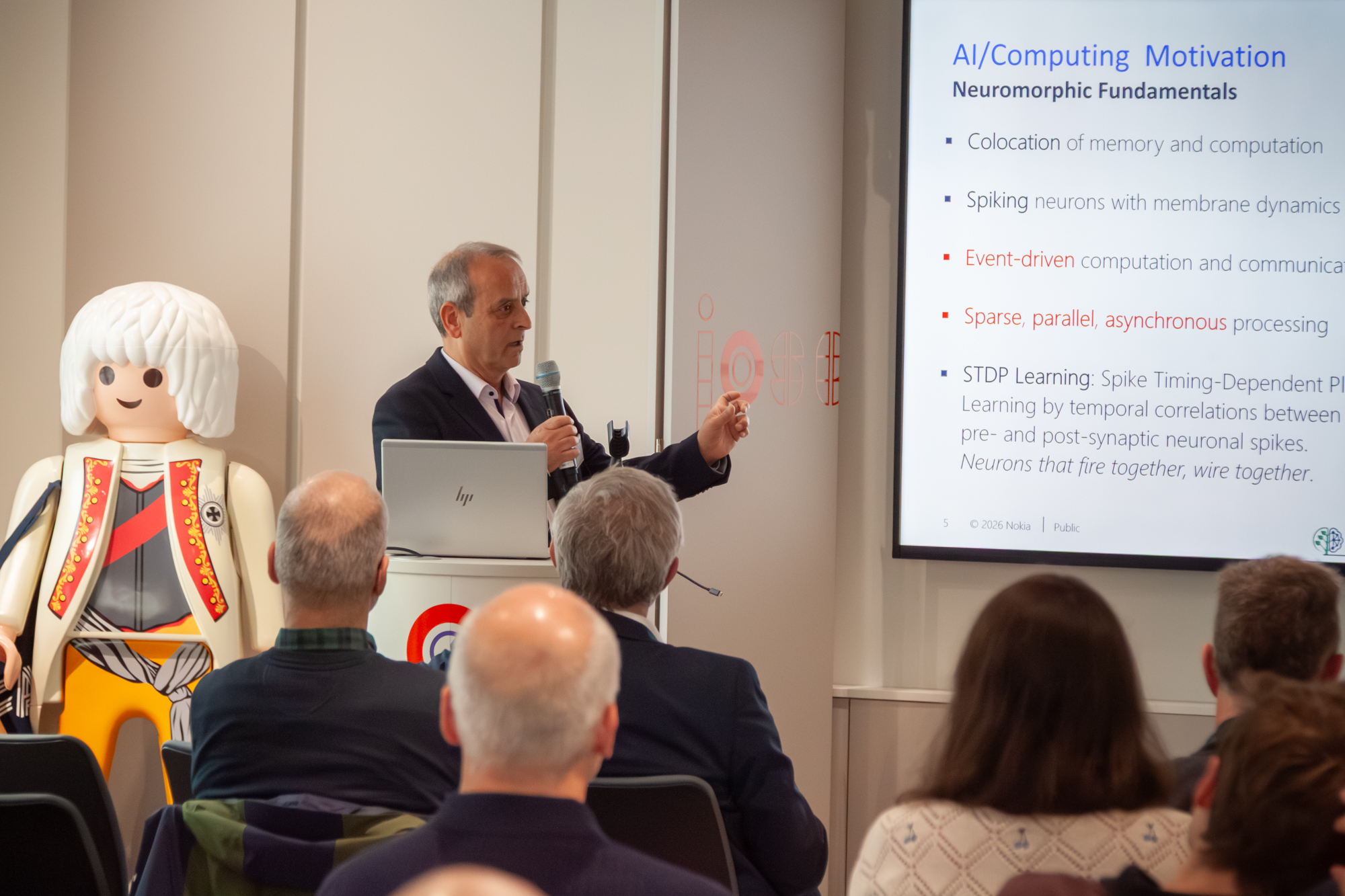
After a short break, Dr. Fariborz Derakhshan (Nokia Bell Labs) and Dr. Leonidas Richter (Fraunhofer IIS) gave a presentation demonstrating how neuromorphic hardware with event-based, spiking neural computing can revolutionize future communication systems – especially where latency, energy consumption, and scalability are critical. Using two novel ASICs – ADELIA and SENNA – they demonstrated how artificial intelligence can be directly integrated into communication hardware to overcome the limitations of traditional CPU/GPU-based systems.
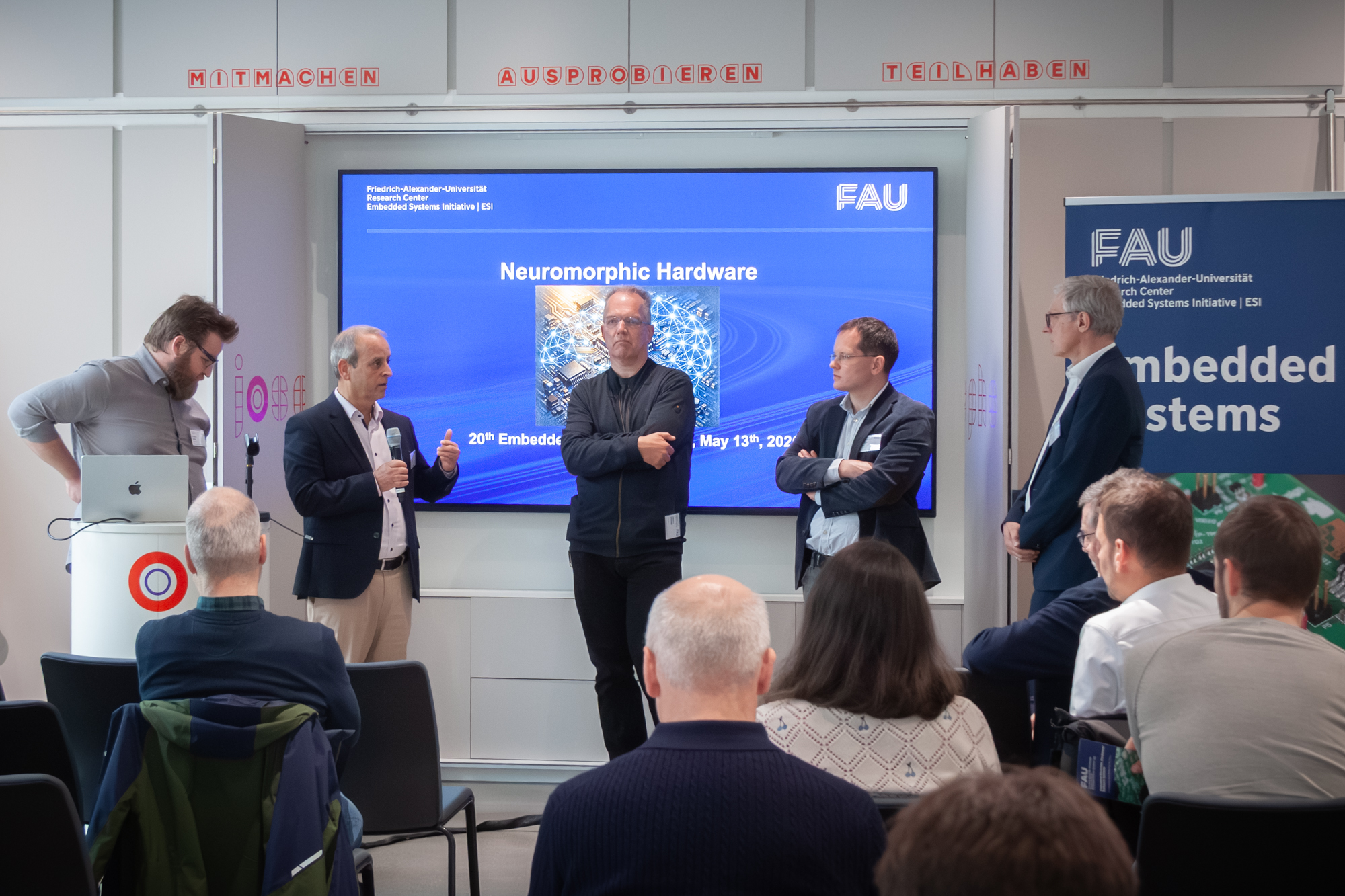
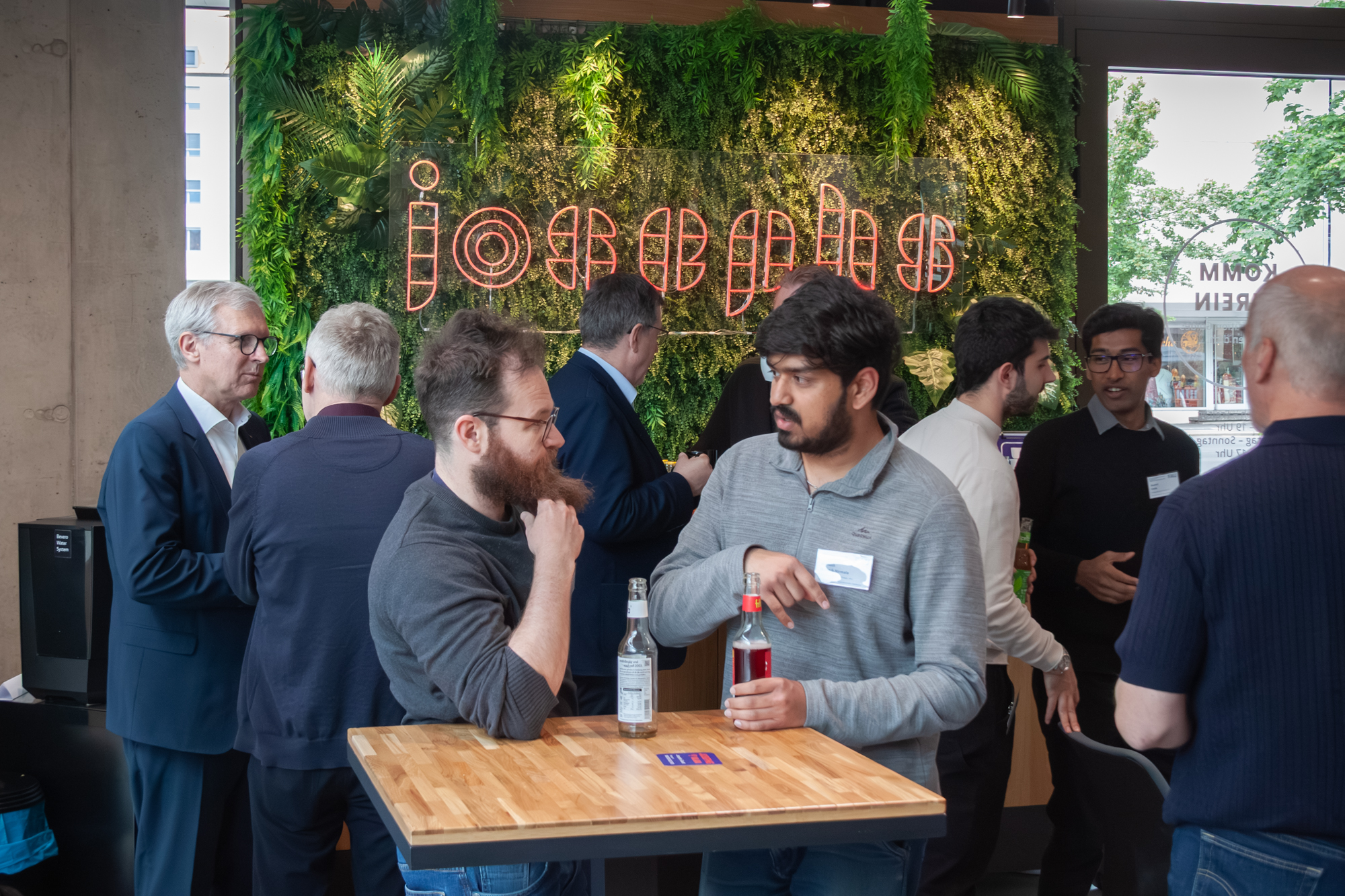
The event concluded with a panel discussion featuring all speakers, addressing key questions such as “When will neuromorphic hardware cease to be a niche technology and become the standard?” and “How will the neuromorphic software ecosystem emerge?” This was followed by further lively discussions over refreshments, where participants had the opportunity to connect directly with the speakers and exchange ideas for future research projects.
The 20th Embedded Talk was a great success and provided a valuable platform to highlight the challenges, opportunities and future development directions of neuromorphic hardware — and demonstrated the important collaboration between research, industry and universities in the field of embedded artificial intelligence.
Pictures of the Event
Contact

Dr.-Ing. Torsten Klie
FAU Research Center Embedded Systems Initiative (FAU ESI)